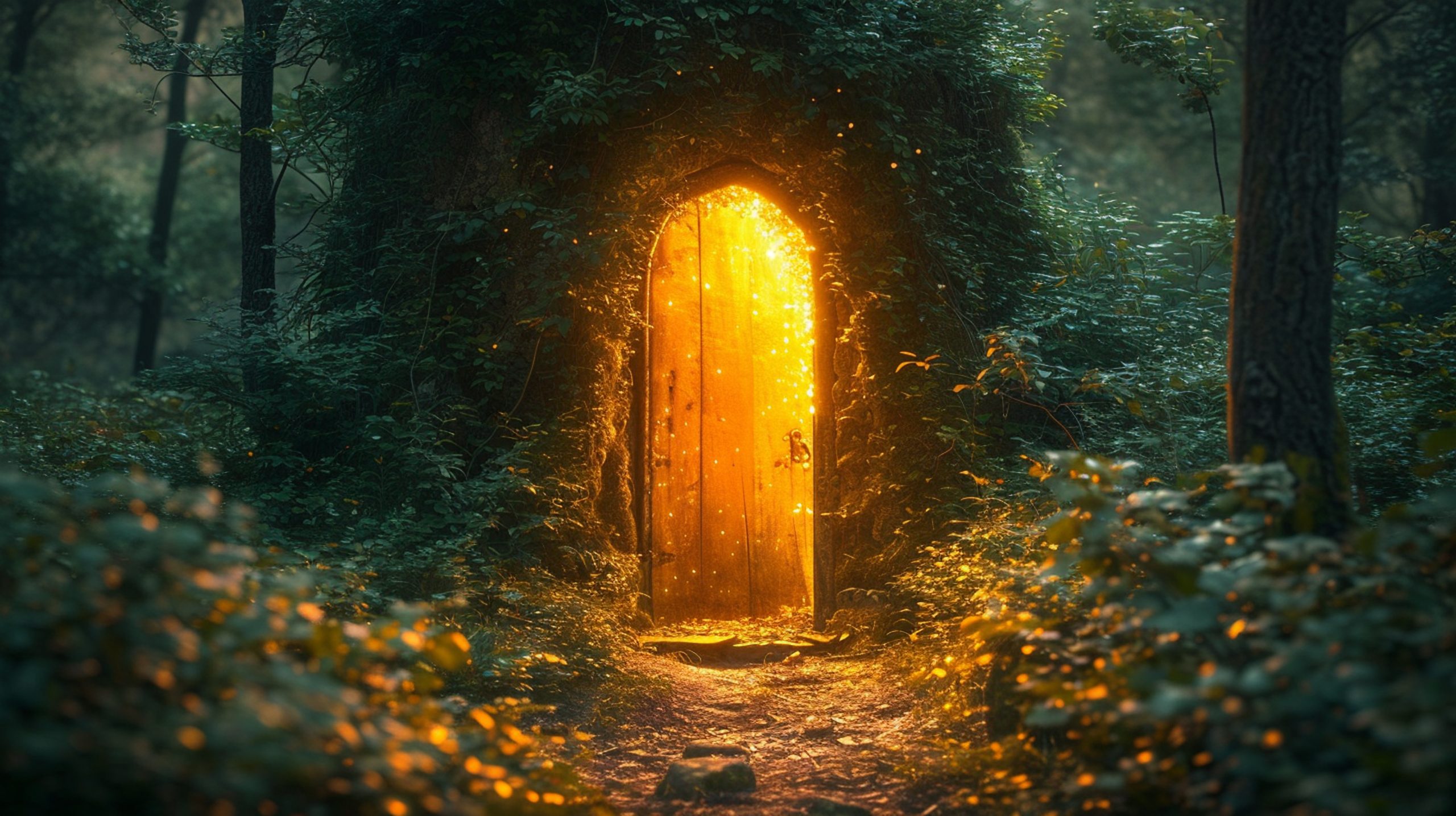
Dream Tending and Active Imagination Immersion
This past weekend I spent fully immersed in training with other clinicians, therapists, seekers, and artists in the Dream Tending and Active Imagination Immersion Program with Dr Stephen Aizenstat. For reference, Dr. Stephen Aizenstat is the founder of the Pacifica Institute, a leading university with a specific focus on graduate and post graduate studies on depth (Jungian) psychology, ego-psychology, and mythology. He has worked with world renowned scholars such as Jungian Analyst, Marion Woodman, Archetypal Psychologist James Hillman who was introduced to Carl Jung and eventually achieved his PH.D from University of Zurich, and his analyst’s diploma from C.G Jung Institute before becoming its director, and academic Joseph Campbell (influencer of George Lucas and Star Wars franchise with the Hero’s Journey). Dr. Aizenstat has taught, lectured, spoke at the United Nations, and wrote books on dream work (Imagination Matrix) and created his own approach called Dream Tending.
Influences of Goddess and Earth
The Dream Tending and Active Imagination Immersion Program is an in depth, 6 months intensive with 4 weekends with live, experiential training, weekly dream triads, monthly interest group meet ups for Carl Jung’s Red Book, and another group that I signed up for focusing on Dreaming with the Land. For the second module, which just occurred this past weekend, with inspiration of elders and mentors, Jungian Analyst Marion Woodman, and Lithuanian mythologist, archeologist and anthropologist Marija Gimbutas, we focused on how to dream with the land. I’ve found myself drawn to both Woodman’s and Gimbutas’s work, Woodman being a somewhat local and well-known Jungian, and Gimbutas, for the fact that my daughter also has a Lithuanian lineage and a great-grandmother who fled the country during Soviet Occupation. Lithuania has one of the world’s most ancient languages and was the last Pagan states during medieval Europe. Before Christianity, Lithuanian’s practiced a polytheistic religion that was deeply connected to nature, celestial bodies, and preserved its traditions with folklore and oral traditions. Gimbutas’s archaeological work spanned across Eastern Europe, discovering goddess symbols and statues which led to her hypothesis that cultures before 3000 BCE were matriarchal and matrilineal, with a focus on fertility, nature, and female deities in religion, rather than a patriarchal society where conflict and war were prominent.
Dreaming with the Land
Through dream practice, ‘Tending’ others dreams, and sitting in community, we explored how to connect with Gaia (mother earth-whatever archetype of nature and planet resonates) in Dreamwork. This looked like seeking different elements of nature in dreams, water, earth, fire, air. It was such a deep and regenerative process, one where I feel a little out of sorts now that I’ve stepped back into ‘normal life,’ (thank goodness I booked today off!) The experiential process, similar to Fritz Perls’ Here and Now approach to dreams, can invite us to speak from a place of land, or Gaia herself. In Dream Tending, there is no ‘What does this symbol mean,’ rather, a curiosity as to who has shown up. ‘Who’s journeying now?’ On my table, I sat with a pine branch and pinecone that I picked up on my ‘walk about’ during Saturday’s lunch break. I held the pine branch in my hand, smelling the brightness of the needles, imagining an elixir of pine needle tea nourishing me.
Carl Jung’s Red Book
In our own praxis, we are developing our own team of Soul Companions, a dream council, from figures from dreams, active imagination, or even from real life. Carl Jung’s Red Book is referenced as we work with our psyche, and the process of journeying through its depths. Jung’s Red Book is still relatively new to the public, only being published in 2009, after being locked away in a vault for decades. It is a piece of work from his own personal process with active imagining from 1914-1940 that includes both writing and artwork. Presently, there are two versions of the book. One which is the reader’s edition, and the second which includes Jung’s drawings, paintings, and calligraphy text. In the immersion program, we are essentially working on and creating our own ‘Red Book.’
Dreams as Imaginary Medicine
The cross section between psychotherapy and Dreamwork can be incredibly insightful, and cathartic. I’m hesitant to say the word ‘healing,’ (the word always brings up evangelical ‘You are HEALED’ vibes), although I think the process and outcome can provide truth, acceptance, and knowing. In my work as a psychotherapist, I see how letting the mind go, in AF-EMDR for example, can be a visceral and transformative experience. There are studies being done that show developmental repair, for example, with the use of imagination. We know that we cannot go back in time and change the past, but we also know that we can desensitize and reprocess with new memories, real or imaginary, and positive beliefs.
We explored concepts of Imaginal Medicine after tending one’s dream, prescribing like an apothecary, elements to consume and or connect with in daily praxis for a period of time. This might look like sitting with water or specific plant medicine, inviting it into your body, or even placing specific medicines into an imaginary cauldron and accessing those resources daily. Dreams are important. In ancient Greece, there were Asclepian temples, healing sanctuaries where people would sleep over night and Dream Incubation (Healing) would be offered.
Dreamwork and Psychotherapy
From a modern-day medical model, perhaps this appears fantastical and false. However, I also believe indigenous wisdom, and ancestral knowledge has been denied and suppressed for too long. Like Hillman, I think psychology needs to go beyond behaviorism, cognitive, and biological, to include the soul and psyche. It is within my personal belief system that Psychotherapy requires wholeness, the whole body, the personal and collective, and spirit, whatever that may be for someone. We cannot deny that the planet is hurting, as climate change and multiple wars and genocides rage on. Capitalism, oligarchy, and patriarchy separate humanity’s connection to nature, to spirit, and to ourselves (Self). Dreamwork includes elements of reflective functioning and mentalization, looking and understanding outside of the Ego, connecting ourselves to fellow human beings, souls, and spirits. We understand the importance of the mycelium network beneath the forest, this interconnectedness, a traveling system that offers information and support. Why not envision our dreams and dreamwork as such?
Author
Written by Melissa M White, Registered Psychotherapist and owner of Sojourn Psychotherapy located in Dundas ON, Canada. Melissa White is currently studying Dreamwork with two of the world’s experts-Dr. Stephen Aizenstat, and Dr. Leslie Ellis. She uses depth and experiential approaches in psychotherapy, such as attachment focused AF-EMDR, Jungian Sandplay, Sound Therapy, and Dreamwork and Active Imagination.
If you are interested in reaching out for a consultation, please visit the contact page at https://sojournpsychotherapy.ca or emails melissamichellewhite@gmail.com
Website: https://sojournpsychotherapy.ca/
Instagram: https://www.instagram.com/sojourn.psychotherapy/
Psychology Today: https://www.psychologytoday.com/ca/therapists/melissa-white-dundas-on/1100244
Facebook: https://www.facebook.com/profile.php?id=61552257660758
LinkedIn: https://www.linkedin.com/in/melissa-white-m-a-oct-863b3751/

